The Year AI Agents Reshape Enterprise Systems — MCP Becomes the Connectivity Standard
In 2026, AI agent adoption in Japanese enterprises shifts from experiment to production. Mizuho Securities deploying Devin and the standardization of MCP mark the inflection point.
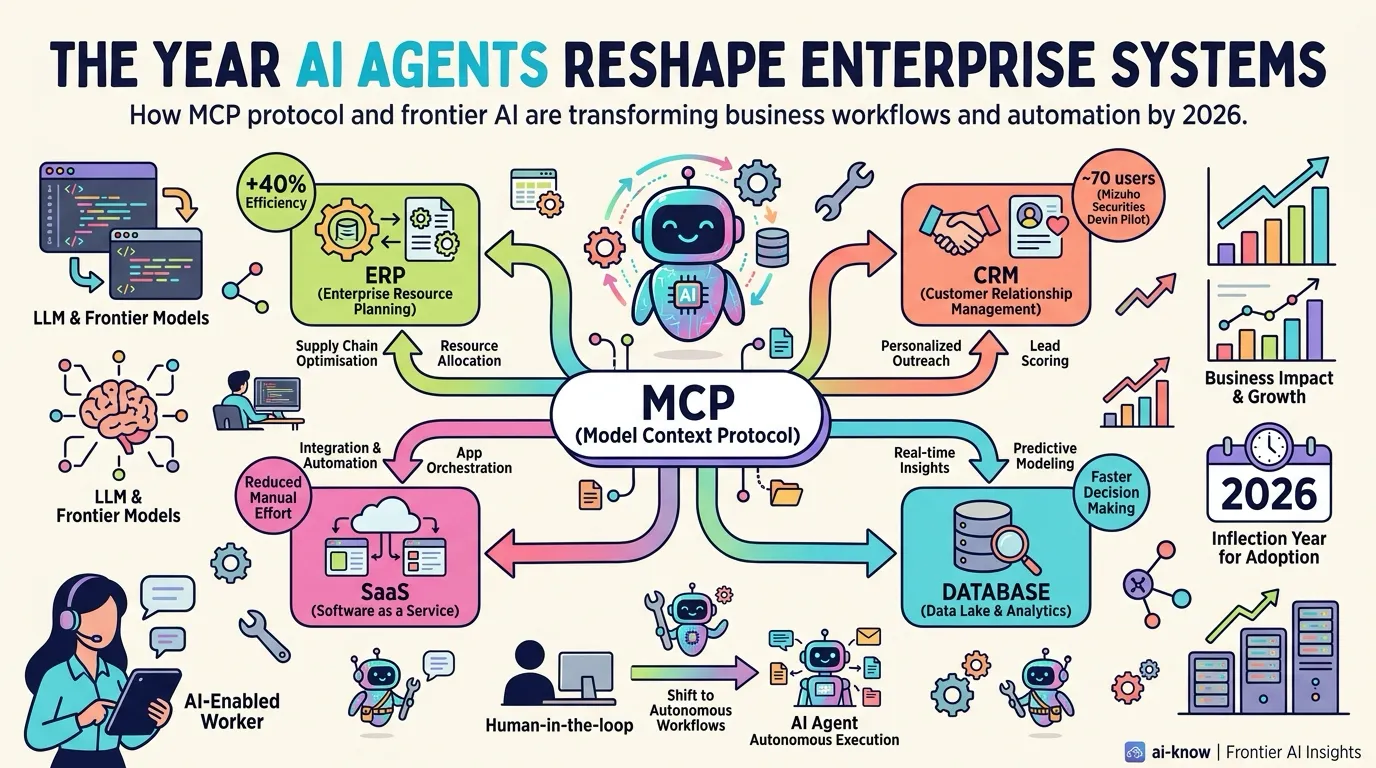
In 2026, AI agent adoption in Japanese enterprises is shifting from experiment to production. Nikkei Crosstech framed this not as another hype cycle, but as a structural transition: Agentic AI now connects in real time to ERP and CRM core systems, calls external APIs, and executes complex business processes with minimal human intervention.
The pivot point isn’t the technology itself — it’s the standardization of connectivity.
Why “2026” Is the Inflection Point
Japanese enterprises typically lag North American adoption by one to two years. SaaS, cloud migration, and generative AI tools have all followed this pattern: a few years after Western case studies emerge, Japanese deployment begins in earnest. Many observers expected AI agents to follow the same trajectory.
That assumption is breaking. In December 2025, Mizuho Securities deployed Devin from Cognition AI (Cognition AI), and by January 2026, around 70 IT staff were already using it. Deploying an agent-style tool in finance — a heavily regulated sector — and embedding it directly in software development, where quality and audit trails matter most, is symbolically significant.
This challenges the “Japan lags” narrative. We’re seeing regulated industries leading, not following.
From RPA to Agent-Native Architectures
How do AI agents differ from traditional RPA (Robotic Process Automation) and chatbots?
The defining difference is dynamic decision-making. RPA replays predefined screen interactions. Chatbots reply within fixed flows. AI agents, given an objective, choose tools, call APIs, interpret results, and decide their next move. They can directly operate core systems and external databases — a structural leap, not an incremental one.
Japan’s RPA market is roughly ¥100 billion ($670M USD), and the migration to agent-style automation is already underway. Major vendors like UiPath and Blue Prism are racing to integrate agent capabilities, evolving from screen-operation robots to “purpose-driven AI workers.”
MCP Owns the “Connectivity Standard”
Connecting an AI agent to multiple business systems, databases, and SaaS platforms requires a unified interface. Building a custom integration per system means every agent swap forces a rewrite.
This is where MCP (Model Context Protocol) stepped in. Proposed by Anthropic (Anthropic) and unanimously selected as Grand Prix at the IT Infrastructure Technology AWARD 2026 in November 2025, MCP defines a standardized interface through which AI agents can communicate uniformly with ERP, databases, and external APIs.
The strategic value of Model Context Protocol (MCP) is that it makes AI agents replaceable without vendor lock-in. With multiple frontier models (Claude / GPT / Gemini) and a growing landscape of agent products (Devin / Operator / vendor-specific tools), standardizing only the connectivity layer dramatically reduces switching costs for enterprises.
If Japanese SaaS vendors (freee, kintone, Salesforce Japan) begin shipping MCP-compatible APIs, agent adoption will accelerate sharply.
HITL Design Determines Success
Precisely because agents act autonomously, where human oversight stays in the loop becomes the critical design question.
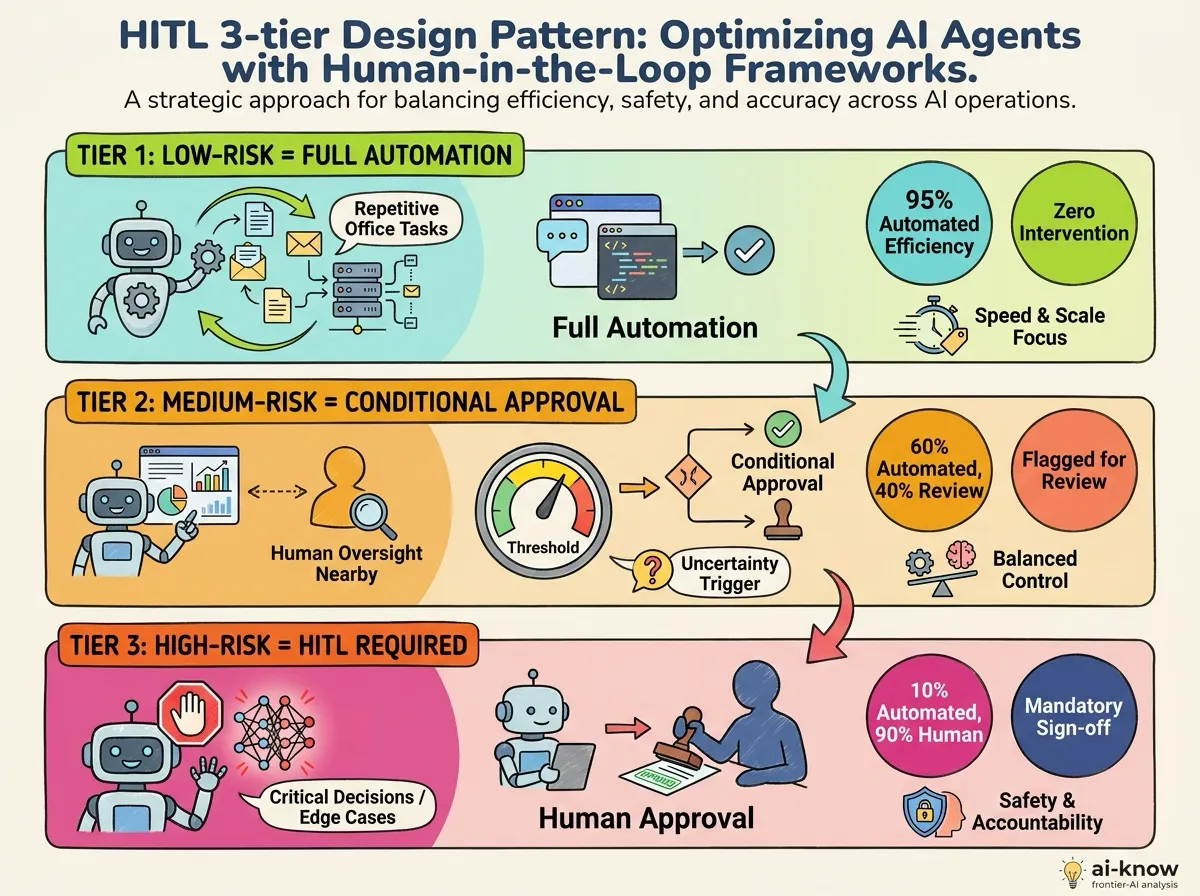
Human-in-the-Loop (HITL) (HITL) is a pattern that embeds human approval or correction steps into the AI’s decision-making process — a discipline pioneered by Western AI safety research communities. Full automation invites runaway behavior; full human approval defeats the purpose of automation. Where you draw the line decides whether an enterprise rollout succeeds or stalls.
A practical heuristic: low-risk repetitive work runs fully automated, high-risk decisions (money, contracts, personnel) require HITL approval, and the middle ground operates under conditional approval (human-in-the-loop only when thresholds are exceeded). The Mizuho Securities Devin deployment likely follows a similar tiered design: code generation runs autonomously, production deployment requires human approval.
Closing
For Enterprise AI in 2026, the conversation shifts from frontier model performance to “connectivity standards and mature HITL design.” If MCP becomes the de facto standard, enterprises can treat AI agents as plug-in components for business systems, minimizing lock-in while expanding automation incrementally.
The tailwind for Japanese enterprises is twofold: regulated industries (finance, healthcare) are producing leading case studies, and the shared infrastructure (MCP) is maturing in parallel. 2026 will be the year teams stop debating “whether to adopt agents” and start debating “where to start.”
Sources: AI Agents Replace Most of the Work, Reshaping Enterprise Systems (Nikkei Crosstech, 2026)
Related Articles
How OpenAI Rebuilt Its WebRTC Stack from Scratch to Deliver Low-Latency Voice AI at Scale
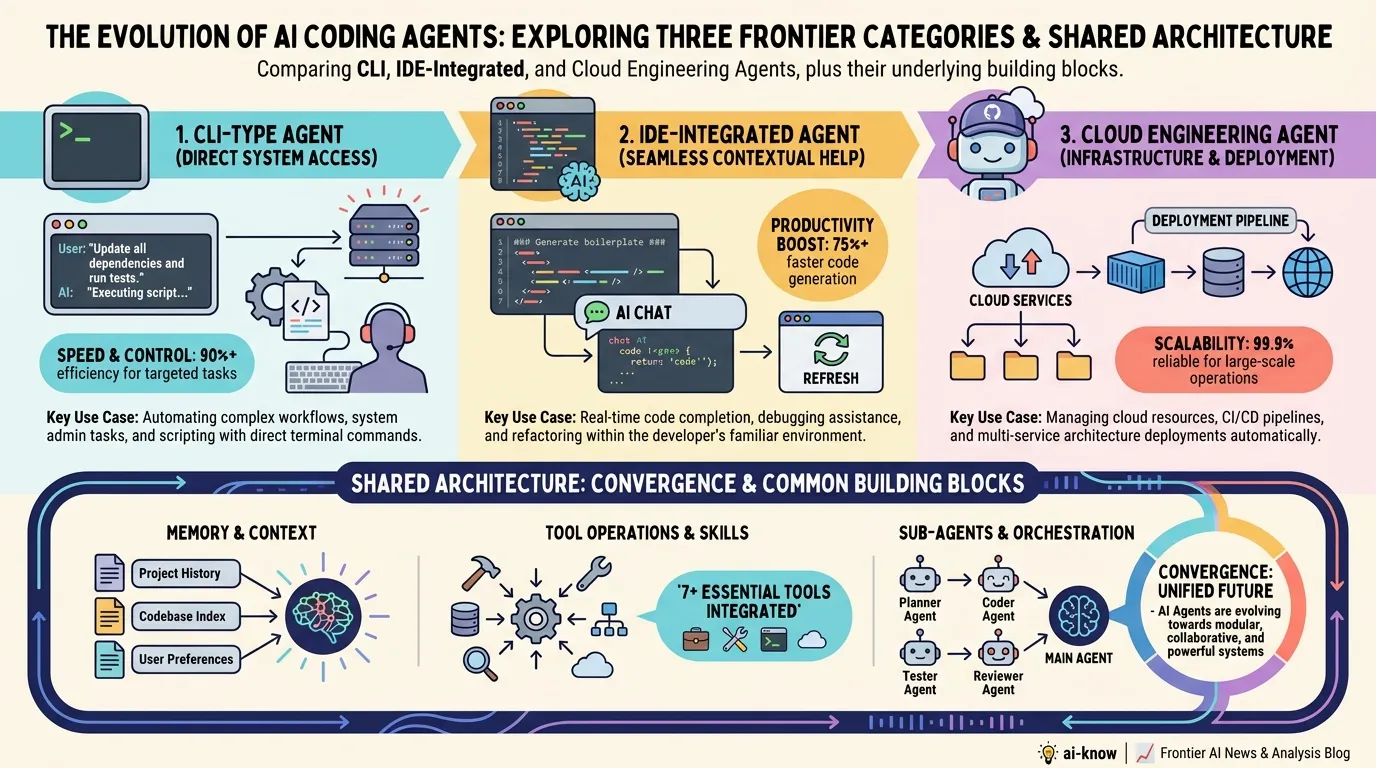
The State of AI Coding Agents in 2026: Architectural Convergence and the Context Engineering Era
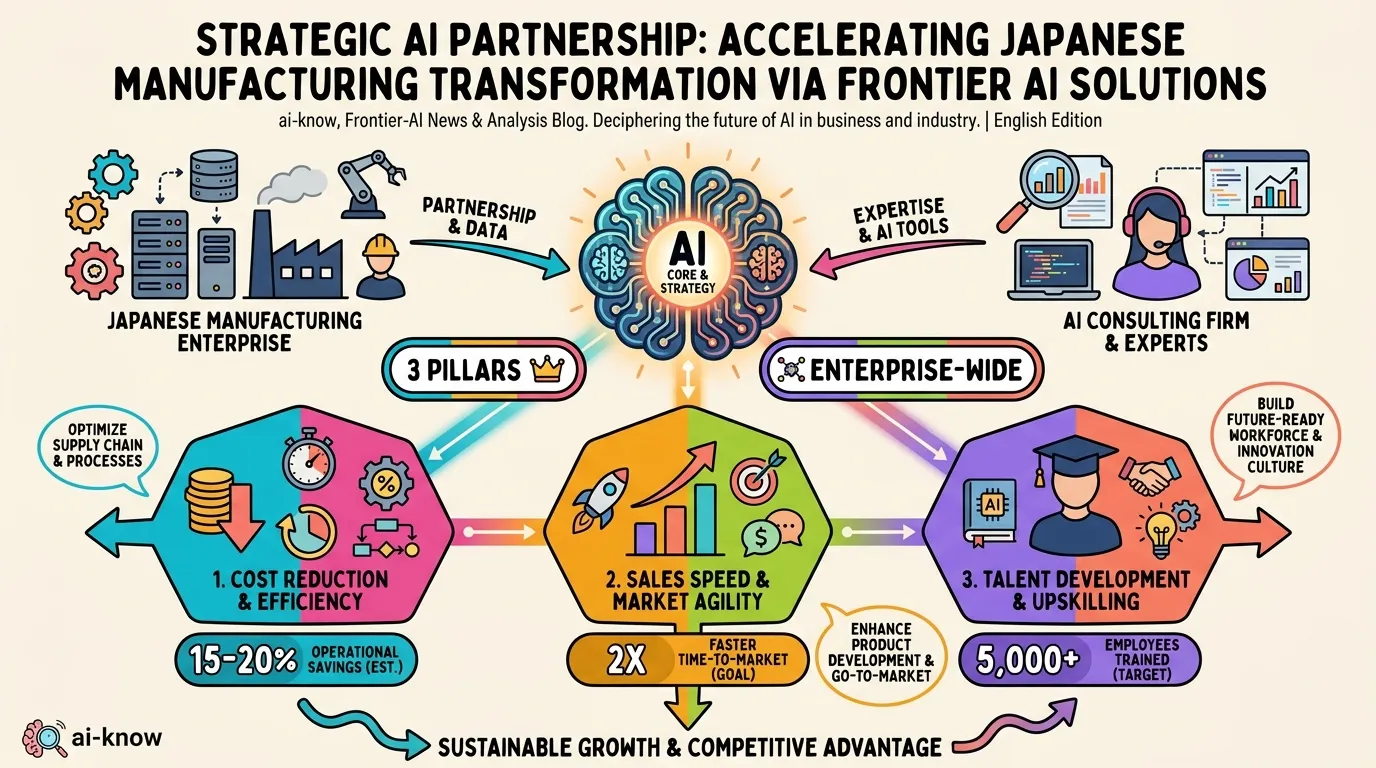
Accenture × NSK: AI-Driven Business Reinvention Moves to Full Scale in Japanese Manufacturing